
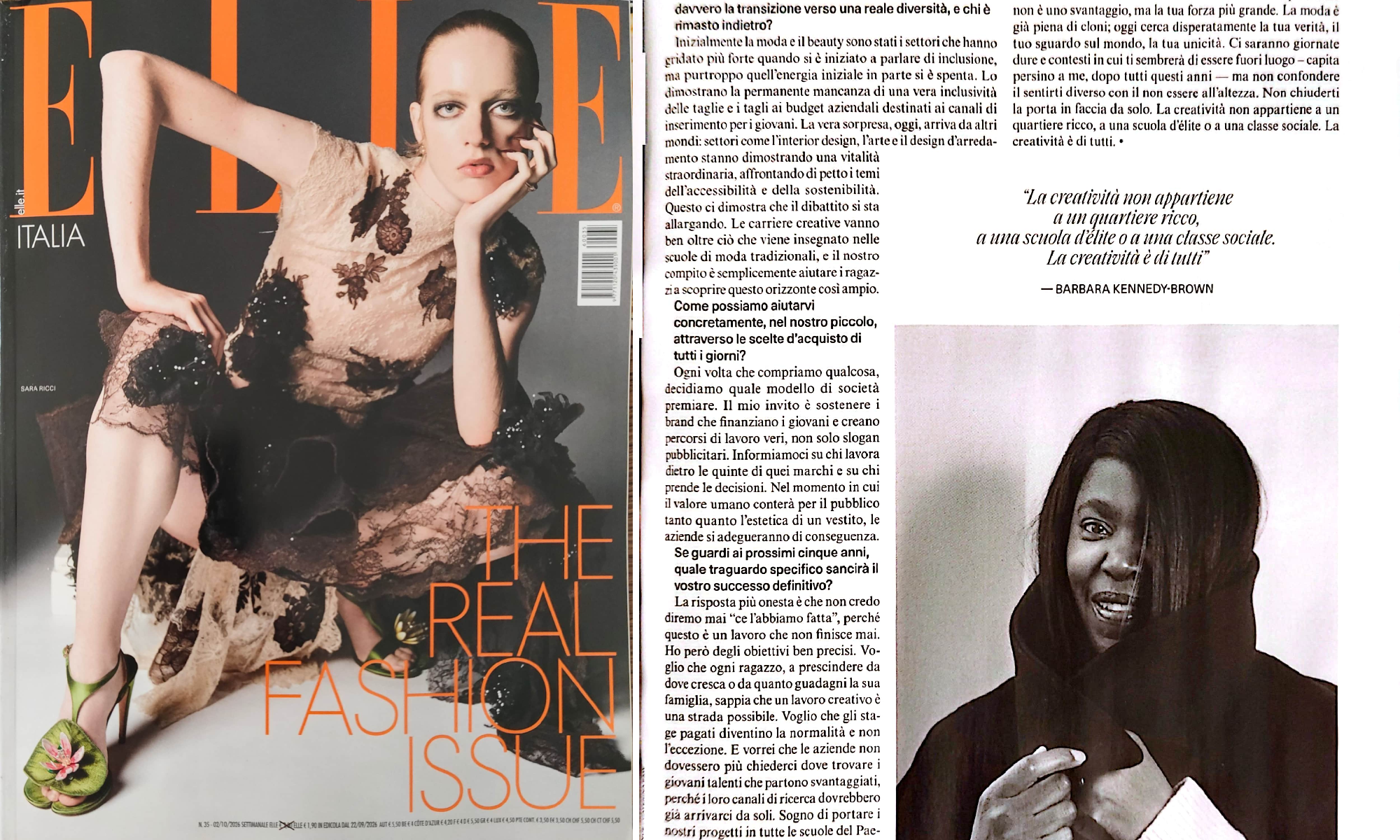
Fashion Minority Alliance founder Barbara Kennedy-Brown discusses access, paid internships, industry connections and why creativity belongs to everyone.
For young people hoping to build careers in fashion, beauty and the wider creative industries, talent is only part of the journey. Knowing where to find opportunities, understanding how an industry works, building meaningful relationships and having access to people who can open doors all play an important role.
In a recent interview with ELLE Italia, Fashion Minority Alliance founder Barbara Kennedy-Brown discusses these issues and the importance of creating practical pathways into creative careers.
At the heart of her message is a simple belief:
“Creativity doesn’t belong to a wealthy neighbourhood, an elite school or a social class. Creativity belongs to everyone.”
Why access matters in the creative industries
Fashion and the wider creative industries can sometimes appear accessible from the outside while remaining difficult to navigate from within. For someone starting out, the challenge may not be a lack of ambition or creative ability. It can be knowing where to start, who to approach and how the industry works.
Barbara describes the importance of the relationships, mentors and professional connections that can help young people understand an industry and access opportunities that might otherwise remain invisible.
This is one of the areas Fashion Minority Alliance seeks to address: helping young people build the knowledge, confidence, relationships and experience needed to navigate creative careers.
Why paid internships matter
One of the key themes of Barbara’s interview is the role of internships. Work experience can provide an important first step into a creative career, but unpaid opportunities can create barriers for young people who cannot afford to work without an income.
For Barbara, paid internships can provide a genuine gateway into the creative industries. They can allow emerging talent to gain practical experience, develop professional relationships and understand the realities of working within an industry all the while ensuring that financial circumstances do not automatically determine who can participate.
The invisible barriers to creative careers
Economic barriers are real, but they are not the only obstacles young creatives can encounter. A lack of professional networks can make it harder to understand how opportunities are found and how the industry operates.
Someone with an established network may have access to introductions, advice and information that another talented young person has never encountered. Creating access therefore means more than simply announcing an opportunity. It means helping young people understand how to navigate the industry once the door is open.
What does meaningful inclusion look like?
Barbara also speaks about the difference between visible statements about inclusion and creating meaningful, measurable change. For organisations, meaningful inclusion can involve looking at recruitment, career pathways and access to entry-level opportunities and considering whether existing systems are reaching talent that may otherwise remain unseen. The goal isn’t to talk about inclusion but to create practical routes through which talented people can participate, progress and build careers.
What would you say to a young creative who is afraid of rejection?
Barbara’s message is particularly relevant to anyone who has ever wondered whether they belong in the creative industries:
Don’t change who you are.
Your background, personal story and perspective do not have to be disadvantages as they are part of what makes a creative voice distinctive. The creative industries need different experiences, perspectives and ways of seeing the world and there is no single background that determines who can be creative.
Barbara Kennedy-Brown in ELLE Italia
We are grateful to ELLE Italia for featuring Barbara Kennedy-Brown and Fashion Minority Alliance in its international edition and for creating space for this important conversation about the future of creative talent.
Read the full interview in ELLE Italia Milano Fashion Week Special Issue No. 35
Frequently Asked Questions
What are the biggest barriers facing young creatives?
Young creatives can encounter barriers including financial limitations, limited professional networks, lack of industry knowledge and difficulty accessing meaningful work experience and opportunities.
How can young people start a career in fashion?
Building relevant skills, gaining practical experience, developing a portfolio, learning about the industry and building genuine professional relationships can all help young people explore careers in fashion.
Why are paid internships important?
Paid internships can provide practical industry experience while reducing the financial barriers associated with working without an income.
What careers are available in the creative industries?
The creative industries include a wide range of careers across fashion, beauty, design, styling, photography, production, media, communications, marketing, art and many other disciplines.
What advice can you give young creatives who are afraid of rejection?
Don’t assume that rejection means you do not belong. Developing your skills, remaining open to learning and staying true to your perspective can help you build confidence and resilience throughout your career.